
Yuzamashi - INKA Yakishime 320 ml YUTAKA
【 Product Type: water cooler, Tokoname ware 】
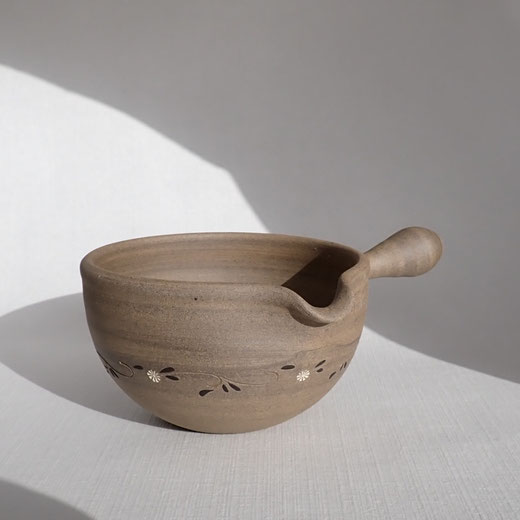
Yuzamashi "Yakishime Inka", 320 ml
by Yutaka
● Side-handle style
● handcrafted in Tokoname, Japan, with artist stamp
- Cooling the hot water -
Handcrafted Yuzamashi (water cooling vessel) by Tokoname master potter Yutaka Tsuzuki. This elegant piece is traditionally handcrafted and impresses with its precise, meticulous workmanship.
The finely fired, smooth ceramic surface is adorned with a subtle, delicate stamped pattern, giving the vessel a serene yet sophisticated appearance. The understated design highlights the beauty of Tokoname pottery and is a perfect complement to high-quality Japanese tea.
With a capacity of approximately 320 ml, this Yuzamashi is slightly larger in size.
A stylish and functional tea vessel – ideal for lovers of authentic Japanese tea culture. 🍵
Yuzamashi "Yakishime Inka", 320 ml
by Yutaka
● Seitengriff-Stil
● handgefertigt in Tokoname, Japan, mit
Künstlerstempel
- Abkühlen des heißen Wassers -
Handgefertigtes Yuzamashi (Abkühlgefäß für Tee) von dem Tokoname-Keramikmeister Yutaka Tsuzuki. Dieses elegante Stück wird in traditioneller Handarbeit gefertigt und überzeugt durch seine präzise, sorgfältige Verarbeitung.
Die fein gebrannte, glatte Keramikoberfläche wird von einem dezenten, filigranen Stempelmuster geschmückt, das dem Gefäß eine ruhige und zugleich edle Ausstrahlung verleiht. Die zurückhaltende Gestaltung unterstreicht die Schönheit der Tokoname-Keramik und passt perfekt zu hochwertigem japanischem Tee.
Mit einem Fassungsvermögen von etwa 320 ml ist dieses Yuzamashi etwas größer dimensioniert.
Ein stilvolles und funktionales Teegefäß – ideal für Liebhaber authentischer japanischer Teekultur. 🍵
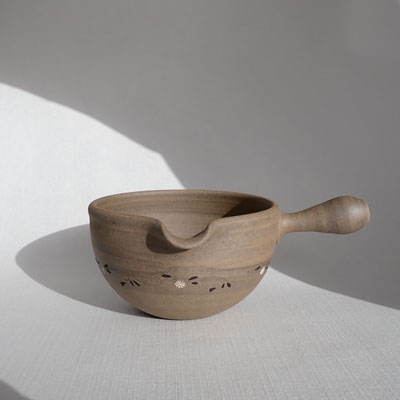
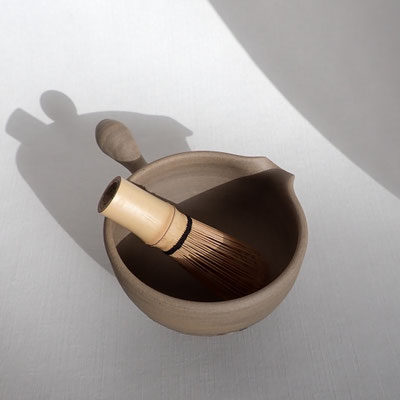
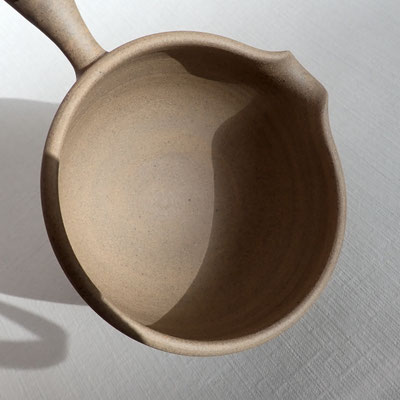
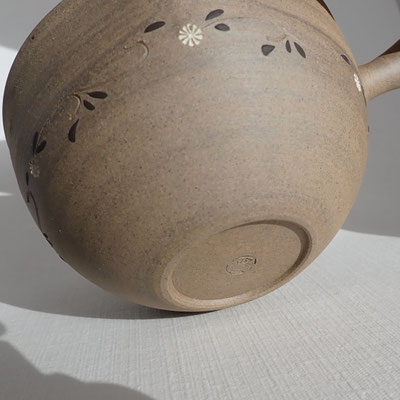


☆Yuzamashi yakishime Inka 320 ml YUTAKA
【 volume / Volume (ca.) 】
(approx. 80% of total volume / ca. 80% von Gesamtvolumen)
320 ml
【 size (approx.) / Maße (ca.) 】
(without Handle / Durchmesser ohne Griff)
L.17 cm x D.13 cm x H. 7,5 cm
【 weight (approx.) / Gewicht (ca.) 】
220 g
【 material / Material 】
Ceramic (Pottery) / Keramik (Töpferei) - Tokoname ware
【 Studio 】
Yutaka Tsuzuki - DAIKOUJI-GAMA
【 origin / Herkunft 】
Aichi, Japan
【 packaging / Verpackung 】
Papier box
* Please handwash to clean.
* Do not use this pitcher in the microwave or dishwasher.
* Bitte reinigen Sie Ihre Schale mit der Hand.
* Verwenden Sie diese Schale nicht in der Mikrowelle oder Spülmaschine.
54,90 €
inkl. MwSt, zzgl. Versandkosten
- Lieferzeit 2-3 Werktage *1 / Shipping 2-3 working days *1
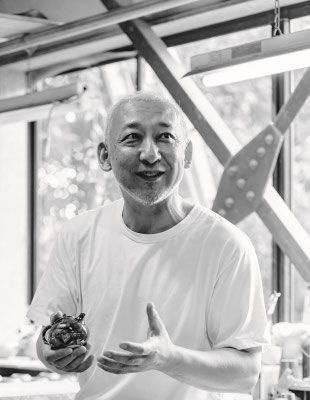

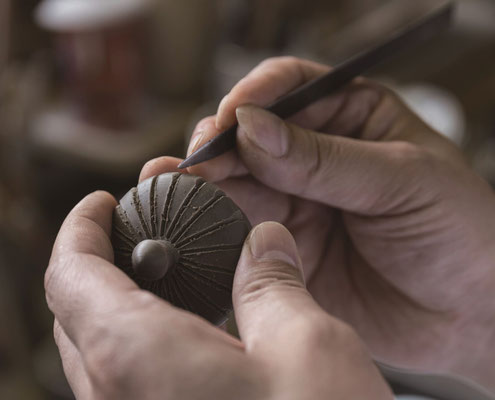
Tsuzuki Yutaka (都築 豊), founder and master craftsman of the Daikoji Kiln (大興寺窯), was born in Tokoname as the son of Tsuzuki Seiho (都築 青峰), a nationally renowned potter. While apprenticing under his father, who ran his own kiln in Tokoname, he also studied pottery in Kyoto, where he learned the craft from many different perspectives.
He produces first-rate kyusu (teapots) that combine the precision of Tokoname ware with the delicacy, beauty, and elegance of Kyoto’s Kiyomizu ware. Elements of Kyo-yaki techniques and aesthetics can be seen throughout his work, in his tools, and in his use of the potter’s wheel (rokuro).
Tsuzuki Yutaka (都築 豊), Gründer und traditioneller Kunsthandwerker des Daikoji-Ofens (大興寺窯), wurde in Tokoname als Sohn des landesweit bekannten Töpfers Tsuzuki Seiho (都築 青峰) geboren. Während seiner Ausbildung bei seinem Vater, der in Tokoname eine eigene Töpferei betrieb, studierte er außerdem Keramik in Kyoto, wo er die Kunst aus vielen unterschiedlichen Perspektiven erlernte.
Er fertigt erstklassige Kyusu (Teekannen), die die Präzision der Tokoname-Keramik mit der Feinheit, Schönheit und Eleganz der Kiyomizu-Keramik aus Kyoto verbinden. Elemente der Techniken und des Stils des Kyo-yaki sind in seinen Arbeiten, seinen Werkzeugen sowie in seiner Verwendung der Töpferscheibe (Rokuro) zu erkennen.
🔸常滑焼 TOKONAME-YAKI - A tradition of quality

Tokoname (常滑) is located near Chubu International Airport in southern Nagoya, Aichi Prefcture. High quality earthenware has been produced here since the 12th century, and still now, Tokoname is a center of pottery production in Japan.
Tokoname is one of Japan's six most important ancient kiln towns - the others are Bizen (備前), Echizen (越前), Seto (瀬戸), Shigaraki (信楽) and Tanba (丹波) - had the largest output of ceramics of any kiln town in the Edo Period (1600-1868).
In particular, Tokoname used to be the main production site for ceramic water pipes. In modern times, it is known around the world for its ornaments such as tea sets and beckoning cats.